Ironically majority of us know/have heard how stress, traumas, excess of cortisol (which is the stress trigger) influence the body weight and or hinder weight loss right?
how many times have we read ppl in the forum talking about weigh loss fields not working much or very slow no matter what? a lot and a bunch of us always jump to advice them to add this and that field…
but never any re nervous system!
its amazing how the brain works that unless is a common theme, an outside information just does not immediately comes up by common sense. i literally shook my head when i found out this.
without listening weight loss related fields or focusing on it i noticed shedding a few pounds and i was like wth is going on even scared me for a moment lol
so i started checking all fields ive been listening for the past 3 weeks to see if any was causing it. and since im not listening to many i realized ive been seriously focusing on healing, freeing and expanding the nervous system capacity so i went and google if there was a direct connection and DUH… had to read it to face palm myself because why we never added any to the weight playlist.
here is what google says:
The nervous system profoundly influences weight loss by controlling appetite, metabolism, and energy expenditure through the autonomic nervous system (ANS) and brain circuits, with stress (activating the sympathetic “fight-or-flight”) hindering weight loss by increasing cortisol and fat storage, while balanced nervous system activity (parasympathetic “rest-and-digest”) supports healthy energy balance, with even subtle movements like fidgeting stimulating nerves to burn fat and aiding weight management.
Key Nervous System Roles in Weight Regulation:
Appetite & Metabolism Control: The brain integrates signals from hormones (like leptin) and fat cells to regulate hunger and metabolism, telling fat cells to release energy when needed.
Autonomic Nervous System (ANS):
Sympathetic (SNS): The “fight-or-flight” system, activated by stress, releases hormones (adrenaline, cortisol) that increase appetite (especially for sugary foods) and promote fat storage (visceral fat).
Parasympathetic (PNS): The “rest-and-digest” system, suppressed by chronic stress, helps with digestion and fat burning; balance between SNS and PNS is crucial for weight management.
Fat Mobilization: Nerves directly connect to fat tissue; stimulating them (e.g., through cold or movement) can trigger fat breakdown (lipolysis) and oxidation, burning calories.
How Dysregulation Hinders Weight Loss
Chronic Stress:
Keeps the SNS active, raising cortisol, increasing cravings for unhealthy foods, slowing metabolism, and promoting belly fat storage.
Hormonal Imbalance: Stress and poor diet disrupt leptin signaling, leading to leptin resistance, making the brain think you’re starving even when you’re not.
Neurological Factors in Weight Loss Resistance:
Some individuals naturally have higher nerve activity, making them more efficient at burning calories and losing weight.
Certain neurological conditions can cause unintentional weight loss by affecting muscles or metabolism.
How are nerves involved?
The sympathetic nervous system subconsciously regulates many of the body’s physiological functions, including the resting metabolic rate (how much energy we burn during sleep and rest), the dissipation of calories after eating and drinking (known as the thermic effect of food) and the breakdown of fat during weight loss.
A study conducted in Australia examined the relationship between sympathetic nervous system activity and weight loss outcomes in a group of 42 obese individuals on a 12-week low calorie diet.
We measured the participants’ nerve activity using a technique called microneurography, where metal microelectrodes, similar to an acupuncture needle, are inserted into nerve fascicles (bundles of nerve fibers) in the lower leg. By manually counting the electrical activity – expressed as the number of bursts per minute – we could measure the nervous impulses travelling from the brain to the skeletal muscle.
We found that successful weight losers (who lost an average of 9 kilograms) had a higher resting nerve activity at the start of the program than the participants we categorised as weight-loss resistant (those who lost an average of 3 kilograms).
Successful weight losers also showed large increases in nerve activity after eating a high-carbohydrate meal, whereas the responses were completely blunted in weight-loss resistant subjects, suggesting they were less able to process the calories they consumed.
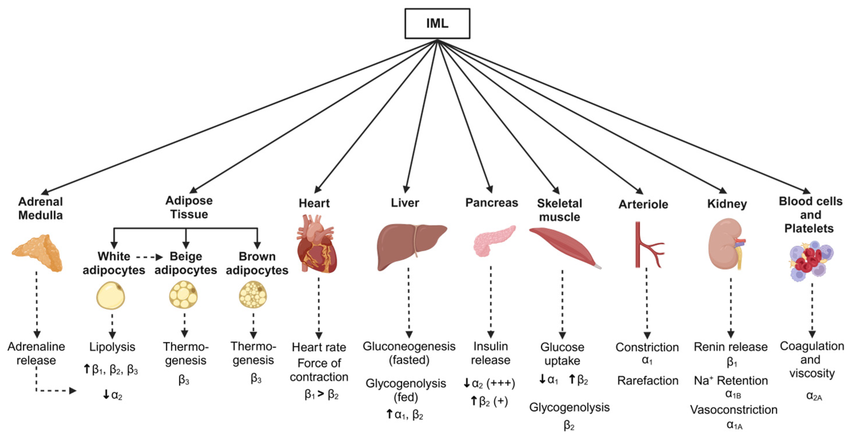
Schematic showing metabolic pathways associated with changes in body weight and sympathetic nervous system activity. Monosynaptic projections arising from brain regions including the rostral and caudal ventrolateral medulla, caudal raphe, and pontine noradrenergic A5 group, as well as the paraventricular nucleus of the hypothalamus, provide inputs to the sympathetic preganglionic neurones in the intermediolateral cell (IML) column of the spinal cord. Sympathetic postganglionic neurones then project them to target organs (solid arrows). Although sympathetic nervous-associated pathways vary between the weight-gain and weight-loss states, key effector organs and the corresponding adrenergic receptors in response to sympathetic activation are shown (dotted arrows)
There you have it, if you wanna loss weight make a playlist with the nervous system audios we have and play it daily
as per study above maybe play it after meals
and i think the biggest tip would be to play them to sleep since is at the resting time where weight loss increases… which is when I’ve been listening my playlist lol
wont exactly share what audios there are in mine because its a combination of 3 creators
but just make yours with the ones you have access to.
now you can shed those extra Xmas pounds you gained 

 very promising field